


 Online Apply
 Simple Form
 Instant Approval
 Get Disbursal
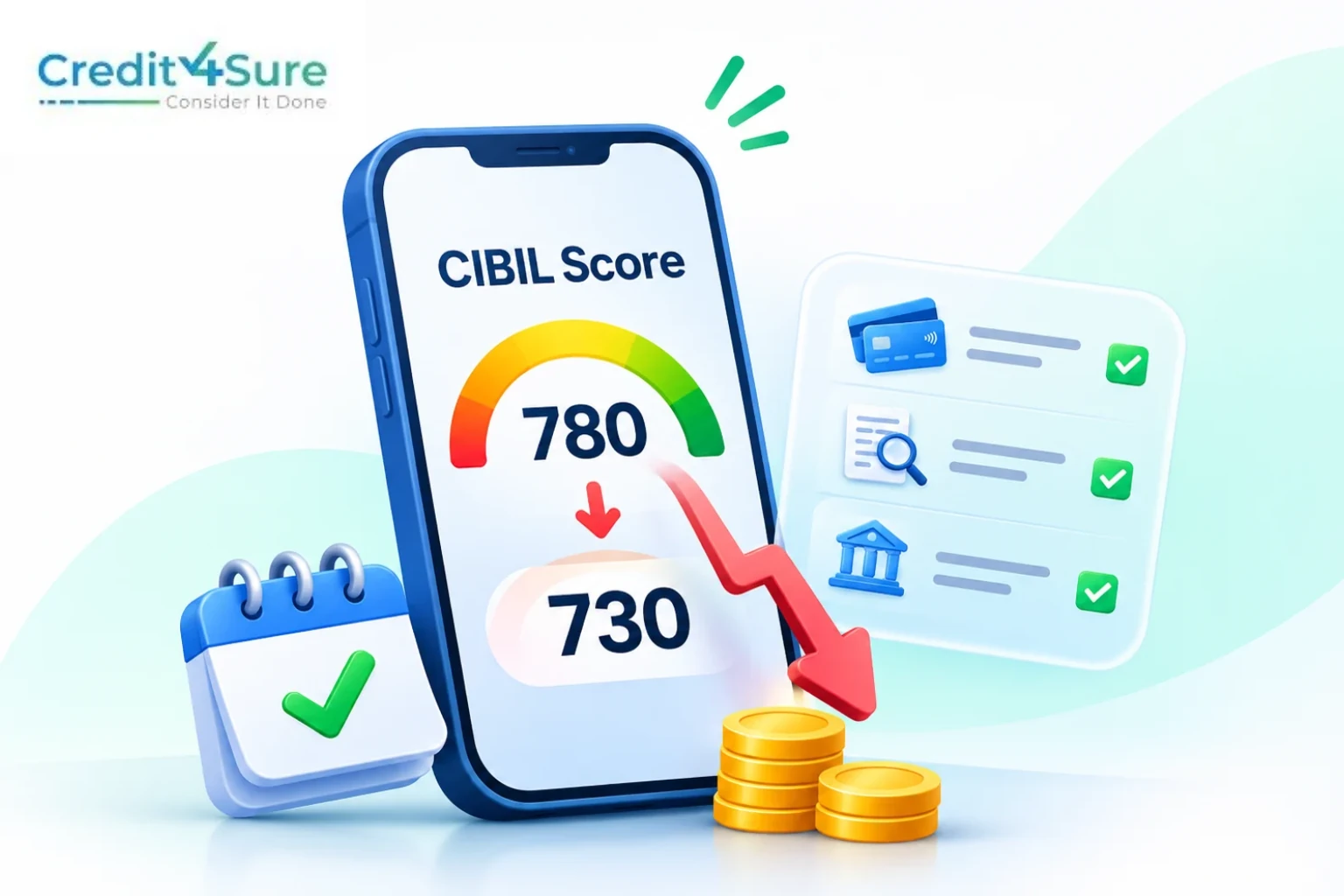
Let us say you check your CIBIL score and notice that it has dropped from 780 to 730. This can be confusing, especially when you have been paying your EMIs on time. Many people assume that a credit score only falls after a missed payment, but that is not always true. Even if you manage your repayments responsibly, factors such as credit card utilisation, new credit applications, or changes in your credit report can affect your score. Understanding how your credit profile works is an important part of managing your finances and exploring personal loan options responsibly.
Why Does Your CIBIL Score Drop Without Missing an EMI?
Your CIBIL score reflects more than just whether you pay your EMIs on time. It also considers how you use credit, your borrowing history, outstanding balances, and recent credit enquiries.
Even when all your payments are on time, your score may change due to:
- High credit card utilisation
- Multiple loan or credit card applications
- Changes in your credit accounts
- New loans or increased outstanding balances
- Incorrect information in your credit report
- Updated information reported by lenders
In simple terms, timely payments are important, but your overall credit behaviour also matters.
7 Reasons Your CIBIL Score May Suddenly Drop
1. Your Credit Card Utilisation Has Increased
Using a large portion of your available credit limit may negatively affect your CIBIL score, even if you pay your credit card bills on time.
Example:
Suppose your credit card limit is ₹1,00,000.
- Last month, you used ₹20,000, which is 20% of your limit.
- This month, you used ₹80,000, which is 80% of your limit.
Your credit utilisation has increased significantly. This may affect how lenders view your credit profile and can influence your score.
What you can do:
- Keep your outstanding credit card balance relatively low.
- Avoid regularly using most of your available credit.
- Pay your credit card bills on time and in full whenever possible.
2. You Have Applied for Multiple Loans Recently
Have you recently applied for personal loans through multiple apps or submitted several credit card applications?
When you apply for credit, lenders may check your credit report. These checks are generally recorded as credit enquiries. Multiple credit enquiries within a short period may affect your score and can make lenders cautious about your borrowing behaviour.
What you can do:
- Avoid applying for multiple loans within a short period.
- Review eligibility criteria before submitting an application.
- Apply for credit only when you genuinely need it.
3. You Have Closed an Old Credit Card
Closing an old credit card may sometimes affect your credit score, depending on your overall credit profile.
When you close a credit card:
- Your total available credit limit may decrease.
- Your credit utilisation ratio may increase if you have balances on other cards.
- Your credit account history and overall profile may change.
However, closing a credit card does not automatically cause your CIBIL score to drop.
What you can do:
Before closing a credit card, consider its annual fees, outstanding balance, available credit on other cards, and your financial requirements.
4. There Is Incorrect Information in Your Credit Report
Your CIBIL score may decrease because of an error in the information reported by a bank or financial institution.
Some common errors include:
- An EMI incorrectly marked as overdue.
- A loan showing an outstanding balance after repayment.
- An account you do not recognise.
- Incorrect repayment or account status information.
What you can do:
Check your credit report carefully. If you find incorrect information, raise a dispute through the official CIBIL website and contact the concerned lender for verification.
5. Your Credit Profile Has Changed After Taking a New Loan
Taking a new loan can change your credit profile, even when you make all repayments on time.
A new loan may affect your:
- Total outstanding debt
- Number of active credit accounts
- Credit mix
- Recent borrowing history
The impact depends on your existing credit profile and the information reported to the credit bureau. Taking a new loan does not automatically mean your score will decrease.
What you can do:
Avoid taking unnecessary loans and ensure that your total EMI obligations remain manageable.
6. Your Lender Has Updated Your Credit Information
Banks and financial institutions report credit-related information to credit bureaus. When your lender updates your credit card balance, loan outstanding, account status, or repayment information, your credit profile may change.
For example, your credit card balance may be reported at a higher level than it was in the previous reporting period. This may affect your credit utilisation and score.
What you can do:
- Compare your latest credit report with the previous one.
- Check your account balances and repayment status.
- Verify whether recent changes are accurate.
7. Your Outstanding Balances or Repayment Pattern Have Changed
Even if you have not missed an EMI, your outstanding balances or repayment pattern may have changed over time.
For example, paying only the minimum amount due on a credit card can leave a larger outstanding balance. A rising debt balance or changes in your repayment pattern may influence how your credit profile is assessed.
What you can do:
- Pay more than the minimum due whenever financially possible.
- Avoid carrying high credit card balances for long periods.
- Keep your total borrowing within a manageable level.
How to Find Out Why Your CIBIL Score Dropped
If your score has suddenly decreased, do not immediately apply for another loan. First, check your credit report to identify what has changed.
Follow these steps:
Step 1: Download Your Latest CIBIL Report
Visit the official TransUnion CIBIL website and access your credit report. Review your accounts, payment history, balances, and enquiries.
Step 2: Check Recent Credit Enquiries
Look for recent loan or credit card enquiries. Check whether they relate to applications you actually submitted.
Step 3: Review Credit Card Outstanding Balances
Compare your current credit card balances with the previous report. Check whether your credit utilisation has increased.
Step 4: Verify Your Payment History
Make sure your EMIs and credit card payments are correctly reported. Look for any incorrectly marked overdue payments.
Step 5: Check Active and Closed Accounts
Review your active loans, closed accounts, outstanding balances, and account status. Report any incorrect or unfamiliar account information.
Step 6: Raise a Dispute if You Find an Error
If your credit report contains inaccurate information, raise a dispute through CIBIL and contact the concerned lender to get it verified and corrected.
TransUnion CIBIL provides one free CIBIL Score and Report per calendar year. You can review your credit information to identify discrepancies and monitor your credit profile.
Can You Get a Personal Loan After Your CIBIL Score Drops?
Yes, getting a personal loan may still be possible after your CIBIL score decreases. However, approval depends on the lender's eligibility criteria and your overall financial profile.
Lenders may consider:
- Your current CIBIL score and credit history
- Monthly income and employment details
- Existing EMIs and outstanding debt
- Repayment capacity
- Loan amount and lender-specific requirements
If you are exploring personal loan options, Credit4Sure allows users to explore loan options online. Eligibility, available loan offers, and approval depend on the lender's assessment and the applicant's profile.
A lower CIBIL score does not always mean your loan application will be rejected, but approval is not guaranteed.
How Can You Improve Your CIBIL Score After a Drop?
If your CIBIL score has decreased, focus on maintaining healthy credit habits instead of trying to increase it immediately.
- Pay EMIs on time: Avoid missed or delayed payments.
- Keep credit utilisation low: Avoid using most of your credit card limit.
- Avoid unnecessary credit applications: Too many applications within a short period may affect your credit profile.
- Pay credit card dues responsibly: Whenever possible, pay the total outstanding amount rather than only the minimum due.
- Check your credit report regularly: Identify incorrect entries or unfamiliar credit accounts.
- Maintain older accounts responsibly: Consider the impact before closing older credit accounts.
- Borrow only when needed: Keep your overall debt manageable.
Improving your CIBIL score takes time. Consistent financial habits can help strengthen your credit profile over time.
Keep Your CIBIL Score on Track
A sudden CIBIL score drop does not necessarily mean you have missed an EMI. High credit card utilisation, recent loan applications, changes in credit accounts, or incorrect credit report information may also affect your score.
If your score has dropped, check your credit report to understand what may have changed. Continue paying your EMIs on time, manage your credit card balances carefully, and avoid unnecessary loan applications.
Remember, a healthy credit profile is built through consistent and responsible credit management, not overnight changes.
Frequently Asked Questions
1. Can my CIBIL score drop by 50 points without missing an EMI?
Yes. Your CIBIL score may decrease due to higher credit utilisation, multiple credit enquiries, changes in outstanding balances, or other changes in your credit profile, even if you have not missed an EMI.
2. Does checking my own CIBIL score reduce it?
No. Checking your own CIBIL score is a soft enquiry and does not lower your score.
3. Why did my CIBIL score suddenly decrease?
Your score may have decreased because of increased credit card usage, multiple loan applications, new credit accounts, changes in reported balances, or incorrect information in your credit report.
4. How long does it take to improve a dropped CIBIL score?
There is no fixed timeline. It depends on the reason for the score drop, your credit history, lender updates, and how consistently you manage your credit.
5. Can I get a personal loan with a low CIBIL score?
It may be possible, depending on the lender's eligibility requirements, your income, existing financial obligations, and repayment capacity. Approval is not guaranteed.